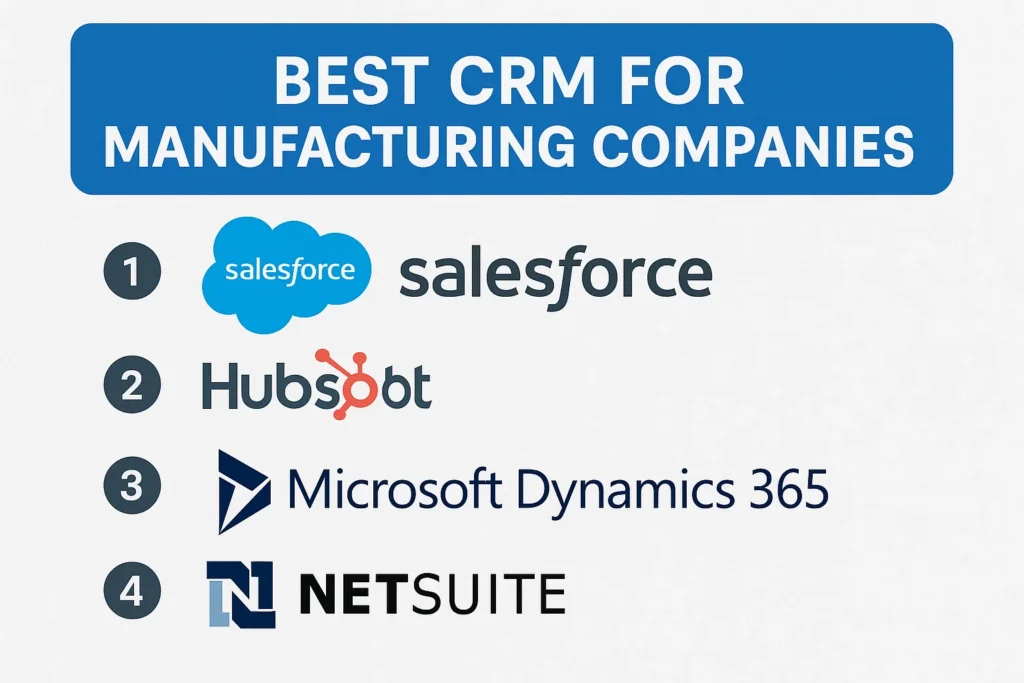
In today’s competitive industrial landscape, manufacturing companies require more than just production efficiency—they need a Customer Relationship Management (CRM) system that can streamline operations, improve client communication, and optimize supply chain management. In 2026, modern CRMs tailored for manufacturers combine traditional sales and marketing functionalities with advanced analytics, automation, and integration with ERP systems, ensuring high productivity and ROI.
Why Manufacturing Companies Need a CRM
Manufacturers face unique challenges, including long sales cycles, complex client interactions, inventory management, and multi-tiered distribution channels. A specialized CRM can address these challenges by:
- Centralizing Customer Data: Keep all client and prospect information in one secure platform for easy access.
- Improving Sales Forecasting: Advanced analytics predict demand and help plan production accordingly.
- Enhancing Customer Communication: Automated alerts, follow-ups, and personalized messages increase client satisfaction.
- Optimizing Supply Chain Operations: Integrations with ERP systems ensure smoother operations and timely deliveries.
- Tracking Sales & Service Efficiency: Monitor performance metrics across sales, production, and support teams.
Key Features to Look for in a Manufacturing CRM
- Integration with ERP and supply chain management software
- Advanced analytics and AI-powered insights
- Lead and opportunity management for B2B sales
- Automated workflows for production, sales, and service teams
- Customizable dashboards and reporting
- Mobile access for on-the-go managers and field agents
- Customer support and ticketing system for industrial clients
Top CRM Platforms for Manufacturing Companies in 2026
| CRM Platform | Key Features | Best For | Integration Options |
|---|---|---|---|
| Salesforce Manufacturing Cloud | Account-based forecasting, production tracking, opportunity management, AI insights | Large manufacturers, B2B industrial companies | ERP systems, supply chain software, analytics tools |
| Zoho CRM | Workflow automation, lead scoring, inventory management integration, sales pipeline visualization | SMEs, production companies, distributors | Zoho Inventory, ERP tools, accounting software |
| HubSpot CRM | Contact management, email automation, deal tracking, analytics dashboards | Small-to-mid manufacturing businesses, B2B sales teams | ERP connectors, marketing platforms, customer support tools |
| Microsoft Dynamics 365 | Supply chain integration, sales & marketing automation, AI forecasting, customer service management | Enterprises, complex manufacturing operations | Microsoft ERP, Outlook, Power BI, IoT tools |
| Odoo CRM | Pipeline management, manufacturing module integration, automated workflows, reporting | Small and medium manufacturers, modular ERP users | Odoo ERP, accounting, inventory, and project modules |
Benefits of Using a CRM in Manufacturing
- Enhanced Customer Relationships: Maintain strong client communication across long B2B cycles.
- Data-Driven Decisions: Leverage analytics and AI to optimize production schedules and sales forecasts.
- Efficient Sales Operations: Reduce manual tasks and automate follow-ups for faster deal closures.
- Supply Chain Optimization: Monitor inventory, shipments, and supplier communications from a single platform.
- Improved ROI: Higher productivity and better customer retention contribute to increased revenue.
Case Studies: Manufacturing CRM Success
| Company | CRM Used | Region | Outcome | Impact |
|---|---|---|---|---|
| Industrial Equipment Co. | Salesforce Manufacturing Cloud | USA | Automated lead tracking and forecasting | Sales increased by 30%, production aligned with demand |
| Textile Manufacturer Ltd. | Zoho CRM | Germany | Inventory & supply chain integration | Reduced delivery delays by 25%, improved customer satisfaction |
| Machine Tools Inc. | Microsoft Dynamics 365 | UK | ERP + CRM integration for production & sales | Improved forecasting accuracy by 40%, operational efficiency boosted |
Best Practices for Implementing CRM in Manufacturing
- Integrate with existing ERP and inventory systems for seamless data flow.
- Customize dashboards for sales, production, and supply chain teams.
- Train staff thoroughly to adopt CRM processes efficiently.
- Use AI analytics for demand forecasting and predictive maintenance.
- Segment clients based on purchase history and business potential for targeted engagement.
- Monitor KPIs regularly to optimize workflows and production efficiency.
Conclusion
For manufacturing companies, CRM systems are no longer optional—they are critical for improving efficiency, managing customer relationships, and optimizing supply chains. The right CRM can drive significant ROI, streamline operations, and boost customer satisfaction. With the platforms outlined above, manufacturers can choose the best solution to meet their specific needs, whether they are SMEs or large industrial enterprises.
FAQs
1. Why do manufacturing companies need a CRM?
Manufacturers need CRMs to manage long B2B sales cycles, track orders, improve customer communication, and integrate with supply chain and ERP systems.
2. Which CRM is best for large manufacturing enterprises?
Salesforce Manufacturing Cloud and Microsoft Dynamics 365 are ideal for large-scale operations with complex workflows and ERP integration requirements.
3. Can SMEs benefit from CRMs in manufacturing?
Yes, CRMs like Zoho CRM, HubSpot, and Odoo are excellent for SMEs, providing affordable solutions with strong automation and reporting features.
4. How does a CRM improve supply chain management?
CRMs integrated with ERP systems allow manufacturers to track inventory, shipments, and supplier communications, ensuring timely deliveries and efficient operations.
5. What is the ROI of implementing a manufacturing CRM?
ROI comes from increased sales, improved customer retention, reduced operational costs, and better demand forecasting, often resulting in 20-40% efficiency gains.