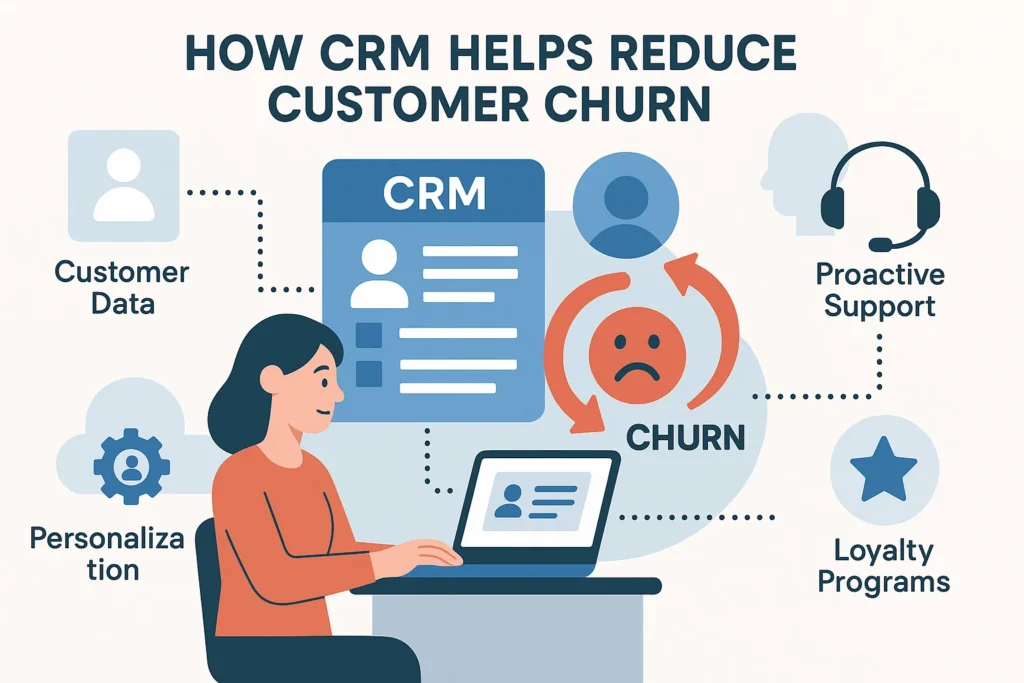
Customer churn is a significant challenge for businesses across all industries. Losing customers not only affects revenue but also increases acquisition costs. A robust Customer Relationship Management (CRM) system can dramatically reduce churn by helping companies understand customer behavior, personalize engagement, and proactively address issues. In Tier-1 markets like the US, UK, Germany, and Canada, implementing CRM strategies for churn reduction can maximize customer lifetime value and drive high eCPM and CPC for digital platforms.
Understanding Customer Churn
Customer churn refers to the percentage of customers who stop using a product or service over a given period. It is a critical KPI for subscription-based businesses, SaaS companies, and service providers. High churn rates indicate underlying problems in customer satisfaction, support, product value, or engagement strategies.
Why CRM is Essential in Reducing Churn
- Centralized Customer Data: A CRM stores detailed customer profiles, including interaction history, preferences, and purchase behavior, enabling personalized engagement.
- Proactive Customer Support: By tracking service issues and feedback, CRM allows businesses to address problems before they lead to churn.
- Automated Retention Campaigns: Drip emails, loyalty programs, and reminders can be automated to maintain engagement.
- Behavior Analytics: Identify at-risk customers by analyzing usage patterns, engagement scores, and support tickets.
- Segmentation & Targeting: Target high-risk segments with tailored offers, discounts, or exclusive content to encourage retention.
Top CRM Features to Reduce Churn
- Customer lifecycle tracking and reporting
- Automated follow-ups and reminders
- Customer feedback and survey integration
- Behavioral analytics & predictive churn modeling
- Multi-channel communication (email, SMS, in-app)
- Loyalty and reward program management
- Segmentation and dynamic targeting
- Integration with support and helpdesk tools
Best CRMs for Churn Reduction in 2026
| CRM Platform | Key Features for Churn Reduction | Best For | Tier-1 Market Adoption |
|---|---|---|---|
| HubSpot CRM | Customer segmentation, automated retention workflows, feedback tracking, analytics dashboards | SMEs, SaaS, startups | High |
| Salesforce CRM | Predictive churn scoring, loyalty program integration, advanced reporting | Enterprise, B2B, subscription services | High |
| Zoho CRM | Behavior tracking, automated follow-ups, customer surveys, email campaigns | SMEs, service-based businesses | Medium-High |
| Freshsales | 360-degree customer view, activity tracking, retention analytics, multi-channel communication | Startups, SMEs, online businesses | Medium |
| ActiveCampaign | Automation workflows, engagement tracking, personalized retention campaigns, predictive insights | SMEs, online sales, SaaS | Medium-High |
Strategies to Reduce Churn Using CRM
- Identify At-Risk Customers: Use analytics and engagement scores to spot potential churn candidates.
- Proactive Outreach: Automate personalized messages or follow-ups to re-engage at-risk customers.
- Incentives & Loyalty Programs: Offer rewards, discounts, or exclusive access to increase retention.
- Customer Feedback Loop: Integrate surveys and feedback forms to address pain points immediately.
- Multi-Channel Engagement: Use email, SMS, phone, and in-app messaging to maintain consistent touchpoints.
- Measure & Optimize: Track retention KPIs and continuously optimize campaigns based on real-time data.
Case Studies: CRM-Driven Churn Reduction
| Company | CRM Used | Region | Outcome | Impact on Churn |
|---|---|---|---|---|
| SaaS Startup A | HubSpot CRM | US | Automated retention workflows and personalized engagement | Reduced churn by 32% in 6 months |
| B2B Enterprise B | Salesforce CRM | UK | Predictive churn scoring and loyalty campaigns | Churn dropped by 28% year-over-year |
| Online Retailer C | ActiveCampaign | Germany | Behavior-based automated emails and retention campaigns | Customer retention increased by 25% |
Conclusion
Reducing customer churn is vital for sustaining revenue and growth. CRM platforms provide businesses with the tools to track customer behavior, personalize engagement, and proactively address risks. By implementing data-driven retention strategies, companies can enhance customer loyalty, improve lifetime value, and increase overall ROI. Leveraging CRMs in Tier-1 markets ensures high engagement metrics, which can directly impact eCPM and CPC potential for associated digital channels.
FAQs
1. How can CRM identify customers likely to churn?
CRMs track engagement metrics, purchase history, support interactions, and behavior patterns to flag at-risk customers for proactive retention efforts.
2. Which CRM is best for churn reduction in SMEs?
HubSpot CRM, Zoho CRM, and ActiveCampaign are highly effective for SMEs due to their automation, analytics, and engagement features.
3. Can CRM help reduce churn in subscription businesses?
Yes, CRMs enable automated renewal reminders, personalized engagement, and behavior tracking, all of which reduce churn in subscription-based models.
4. Are these strategies effective in Tier-1 markets?
Yes, businesses in the US, UK, Germany, and Canada can leverage CRM strategies to achieve measurable churn reduction and ROI.
5. How does CRM improve customer loyalty?
By personalizing communication, rewarding loyal customers, and proactively addressing issues, CRMs help build trust and long-term relationships.